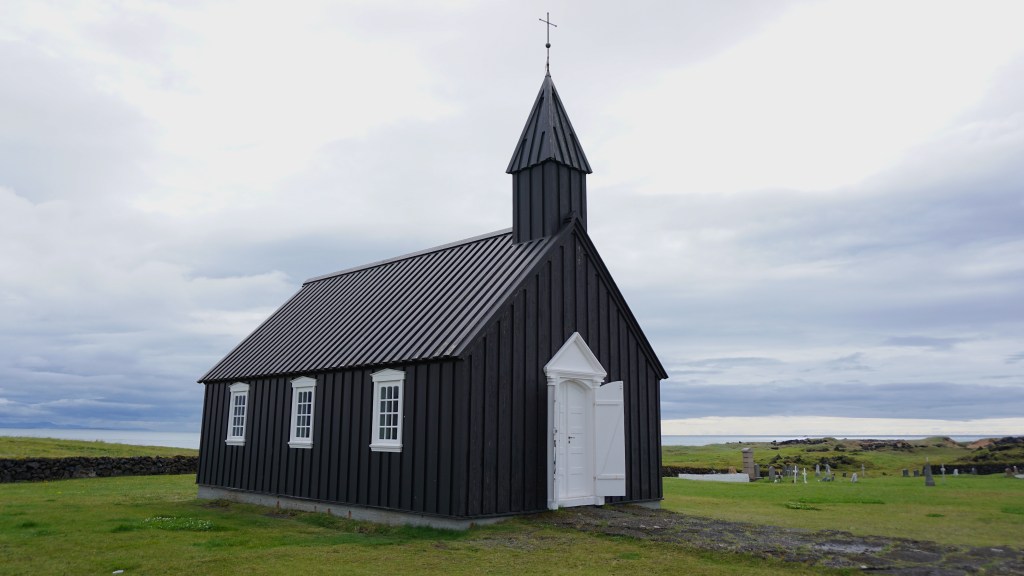
We woke up late, only to hustle with showers and packing before the host of the guesthouse was politely ushering us out the door by 11:05am. As soon as I felt the crisp air and saw the forecast for sunny weather, I was determined to make the most out of our first day on the Snæfellsnes Peninsula. A short drive down the street was one of my most anticipated stops for photography, the picturesque black church known as Búðakirkja. The black church made for a dramatic contrast with its surroundings, allowing the green grass and brown hills to create an almost theatrical backdrop with the overcast sky.
The area we were in, Búðir, is a small hamlet that was once a prosperous fishing village and thriving trading post. Nowadays Búðir only consists of the church and a hotel in close proximity, surrounded by lava fields that stretch for miles. According to the Guide to Iceland website, in 1701 a permit was obtained to build a church and it’s claimed that an old woman suggested that a man spin in circles to become dazed and shoot three arrows into the air, and wherever the last arrow landed was where the church should be built. A couple years later a small turf chapel was built. Over a hundred years passed when Danish King Christian VIII dismissed the chapel, leading to many upset residents financing a new church to be built and maintained. 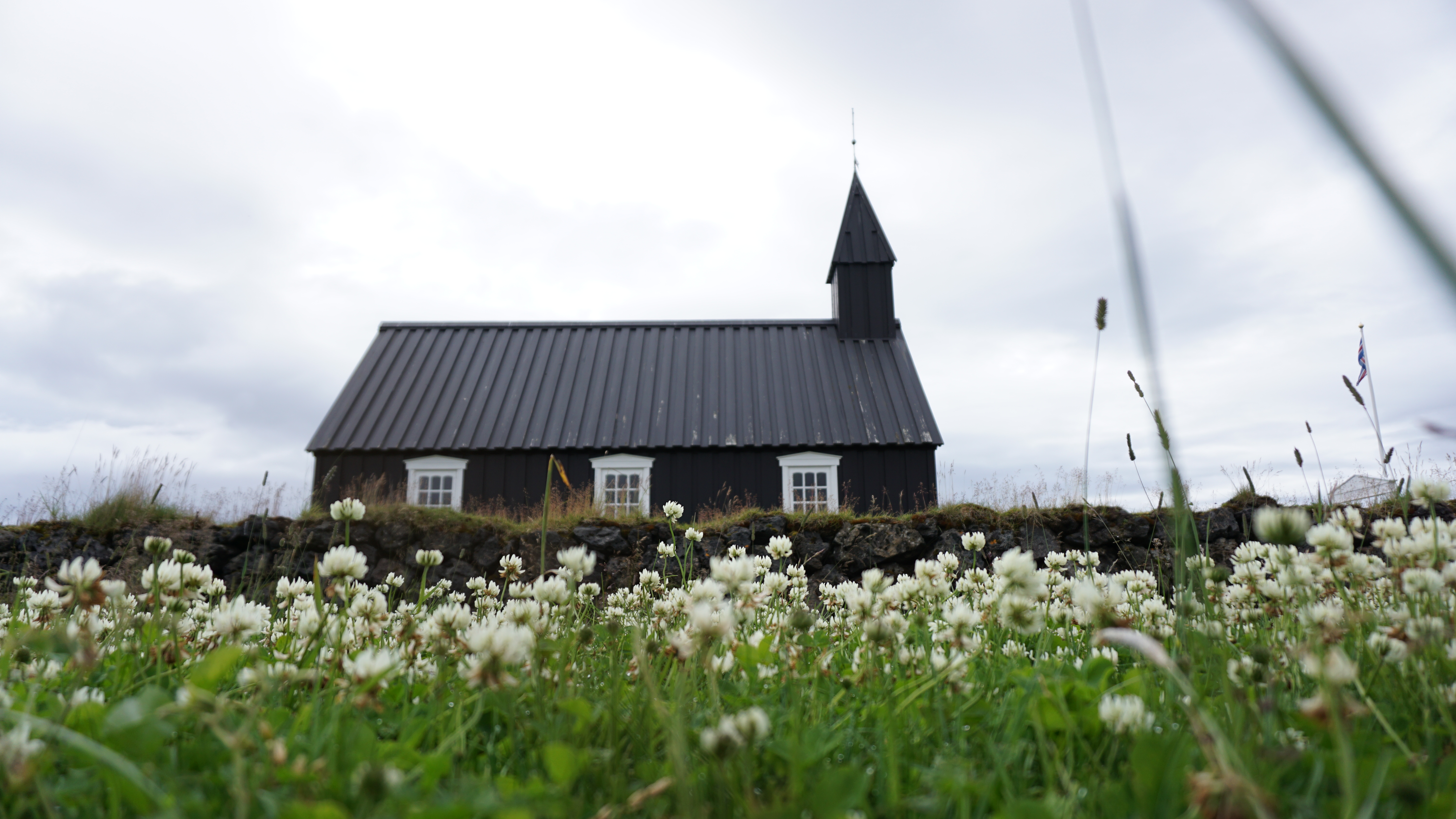
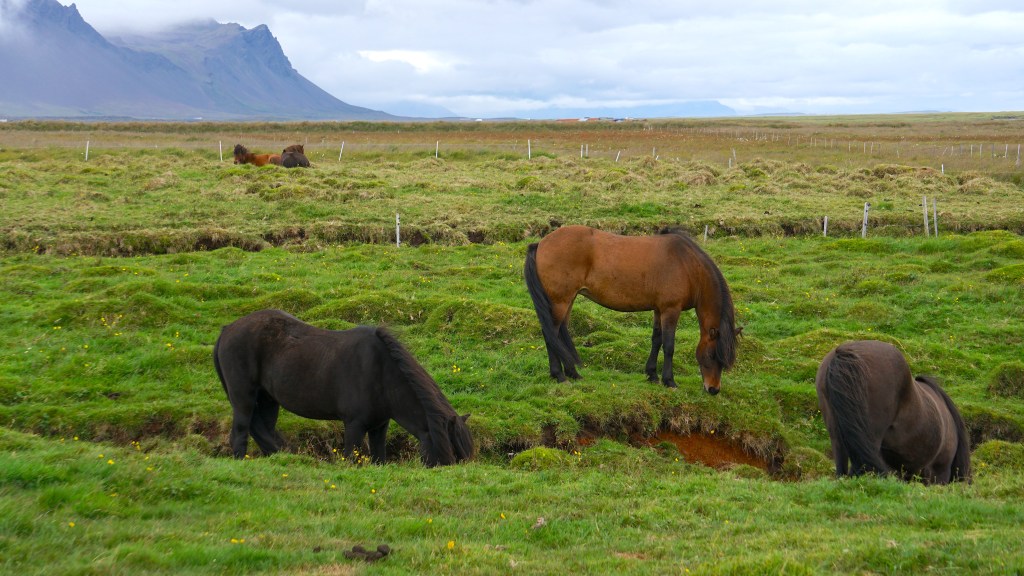
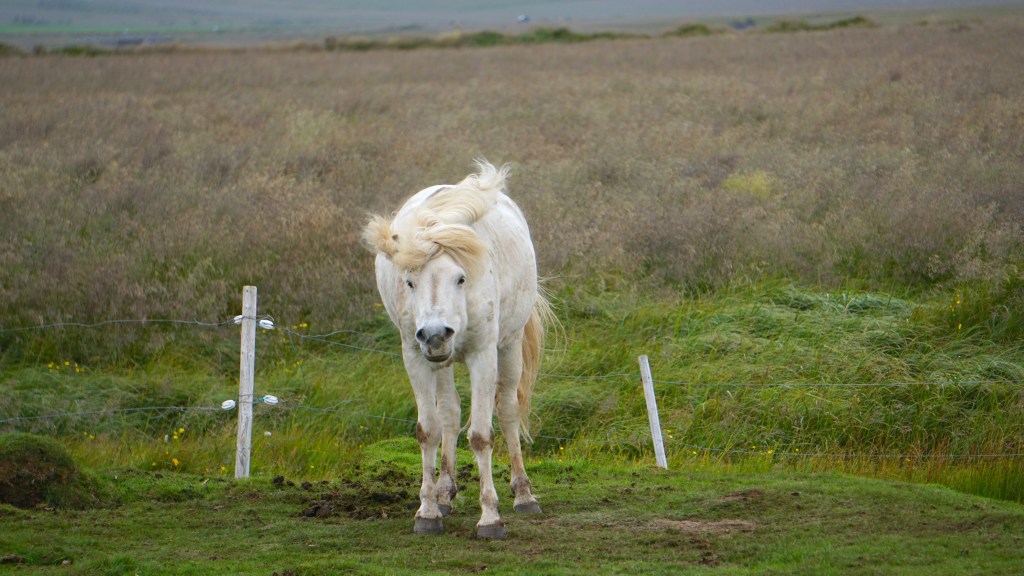
While taking photos on the church grounds, we noticed some sharply dressed people and learned that there was a wedding being hosted there. We saw the wedding photographer capture images of both the groom and bride taking their “first look” at one another, which was very sweet. A priest leaned out from behind the door to lead the remaining guests into the church before the ceremony began. Without wanting to disturb any festivities or disrupt any personal photographs, we carried on. However, we only drove down the road maybe a hundred yards before pulling over to take pictures of some Icelandic horses. They reminded me of dogs with their playful nature, rolling on the ground, digging their hooves into the dirt, and even lying next to one another like they were snuggling.
Our plan for the day was to drive into the towns of Arnarstapi and Hellnar, do a lava tube tour, then to drive along the edge of the peninsula and camp somewhere spontaneous for the night. On the way to Arnarstapi, we came across a huge canyon on our right side. We made an unexpected stop and pulled over to see what this crack in the mountain side was about. This place is known as Rauðfeldsgjá, and its folktale story is definitely an eyebrow raiser. Quoting the sign outside of the canyon:
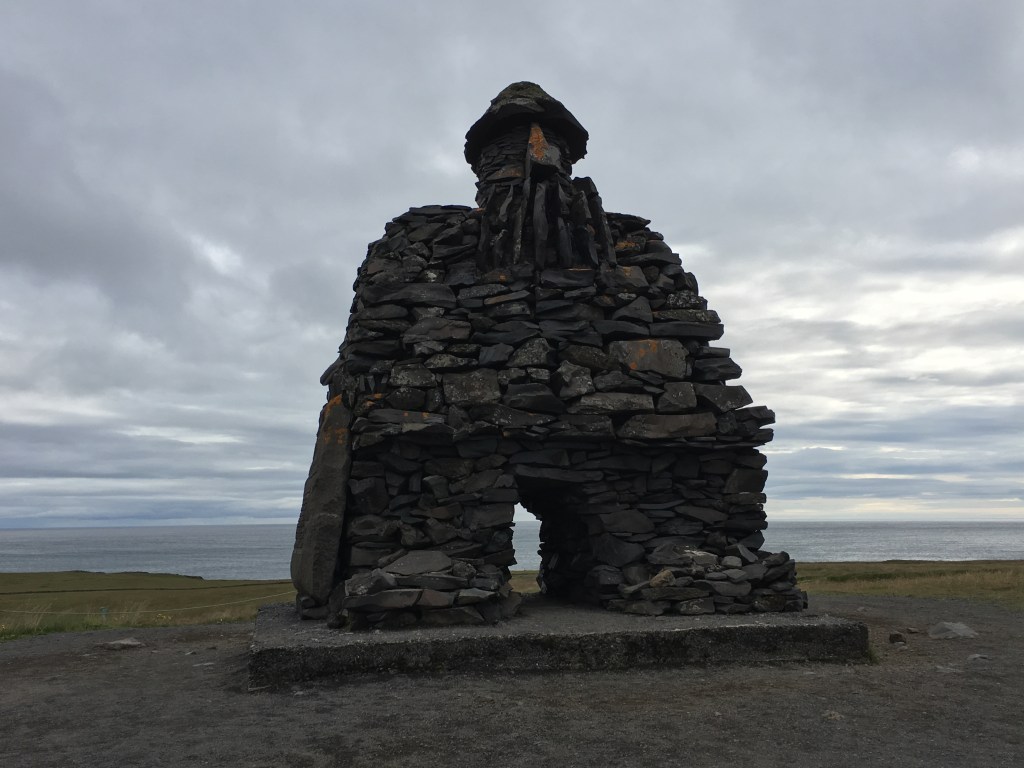
“Bárður Snæfellsás, who was said to be half-man and half-troll, lived with his volupturous and handsome daughters near Laugabrekka in Hellnar at the end of the 9th century. His brother, Porkell, live in Arnarstapi with his two sons, Rauðfeldur and Sölvi. One day when the cousins were playing by the shore, Rauðfeldur pushed Bárður’s eldest daughter, Helga, onto an iceberg and it is said that she drifted all the way to Greenland. Helga was unharmed, but Bárður was so angry that he killed the brothers. He pushed Rauðfeldar into a canyon, which is now called “Rauðfeldar Canyon”, and he pushed Sölvi off the nearby Sölvahamar Cliff. After this incident, Bárður was said to have gone into the glacier and was never seen again.”
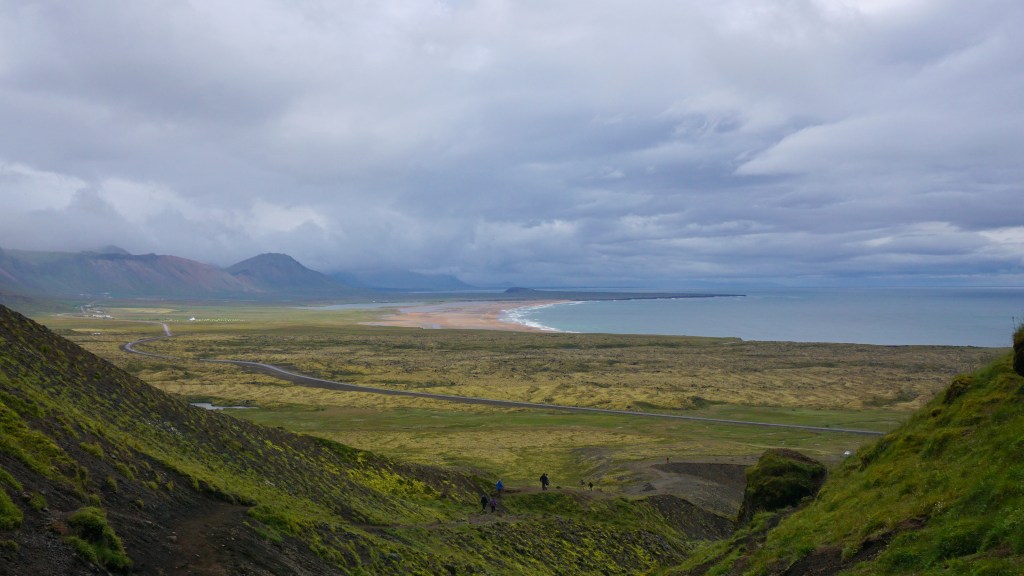
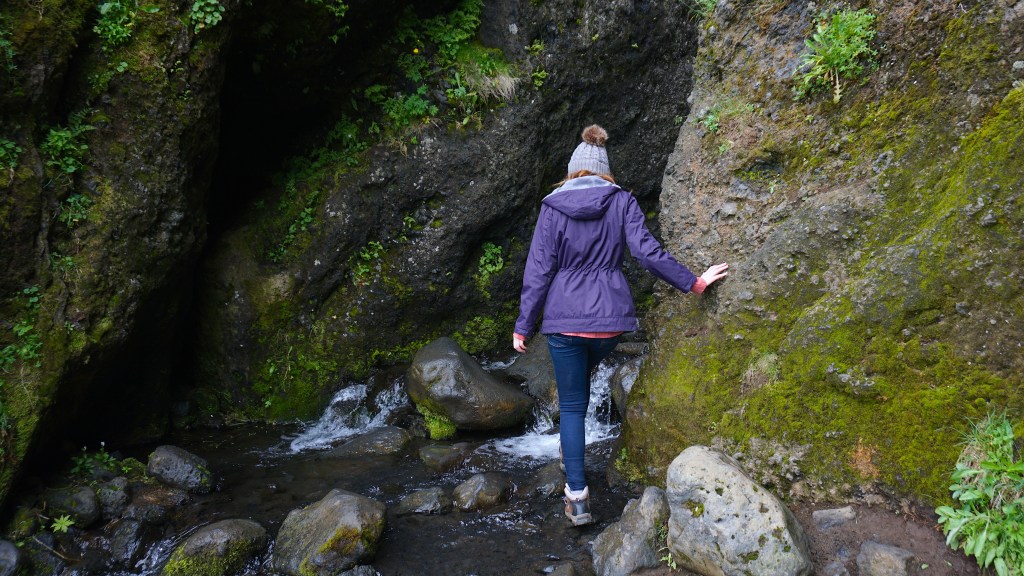
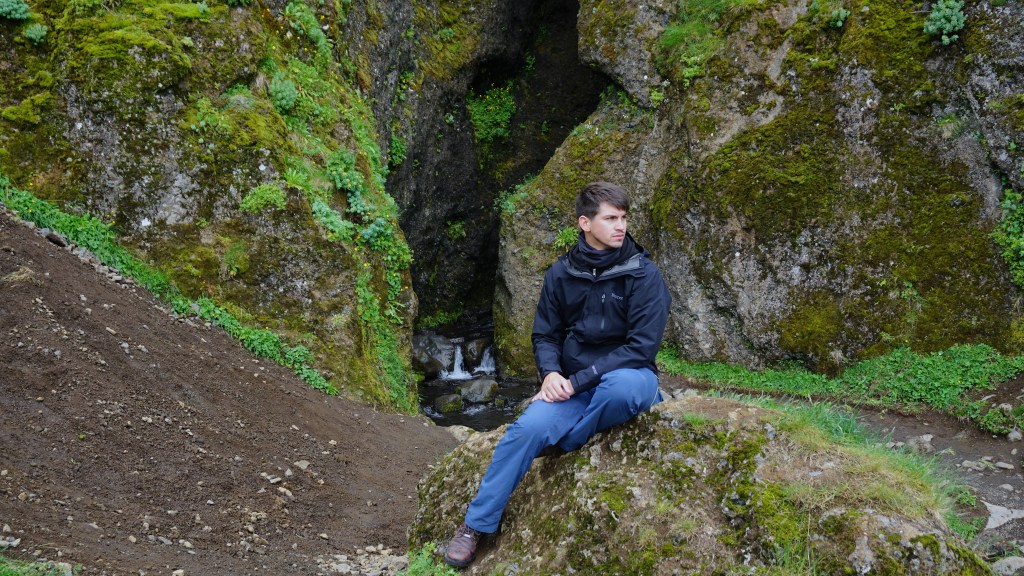
The glacier that the sign is referring to is Snæfellsjökull, the prominent glacier and volcano that has its own national park named after it on the tip of the peninsula, but more on that later. The snow at the very top of the glacier melts and the water trickles down the mountains that often create waterfalls or in this case a small stream that spills out of the tight canyon. We walked into the chasm where a few other tourists were and walked as far as we could on the wet rocks into the mountain. Traces of snow remained here and there on the taller chunks of stone jutting from the walls of the ever enclosing gap. After taking a few photos we walked out of the canyon and took in the view. Seeing that the mouth of the canyon was at an incline, we could see for several miles over the diverse peninsula landscape. For the first time, we saw sand that wasn’t volcanic black in color. In the distance, yellow sand could be seen meeting the ocean which made this already otherworldly scene look even more bizarre yet beautiful.

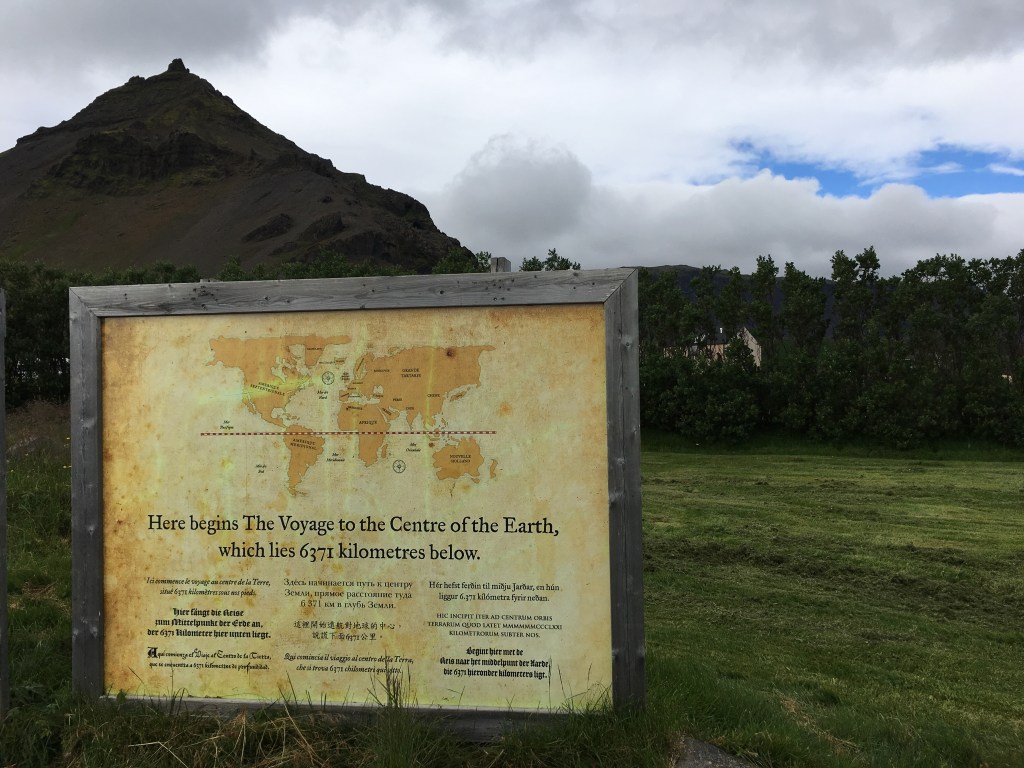
Once we arrived in Arnarstapi, we parked in a central location and immediately started our search for food. The place we decided on was Arnarbær. The restaurant is in a quaint building with a sign outside telling about Jules Verne’s novel Journey to the Center of the Earth which ultimately was a selling point for me, seeing as that that novel is ultimately why I wanted to come to the Snæfellsnes Peninsula in the first place. My girlfriend and I each had our own pizza, and from my experience, Icelandic pizza is pretty great. After eating lunch, we strolled towards the waterline and ran into a large sculpture made of stones. This peculiar statue is the Bárður Saga Snæfellsáss, created by one of Iceland’s most famous sculptors, Ragnar Kjartansson. The half-man half-troll continues to have an impact on the peninsula, even a thousand years after his time.
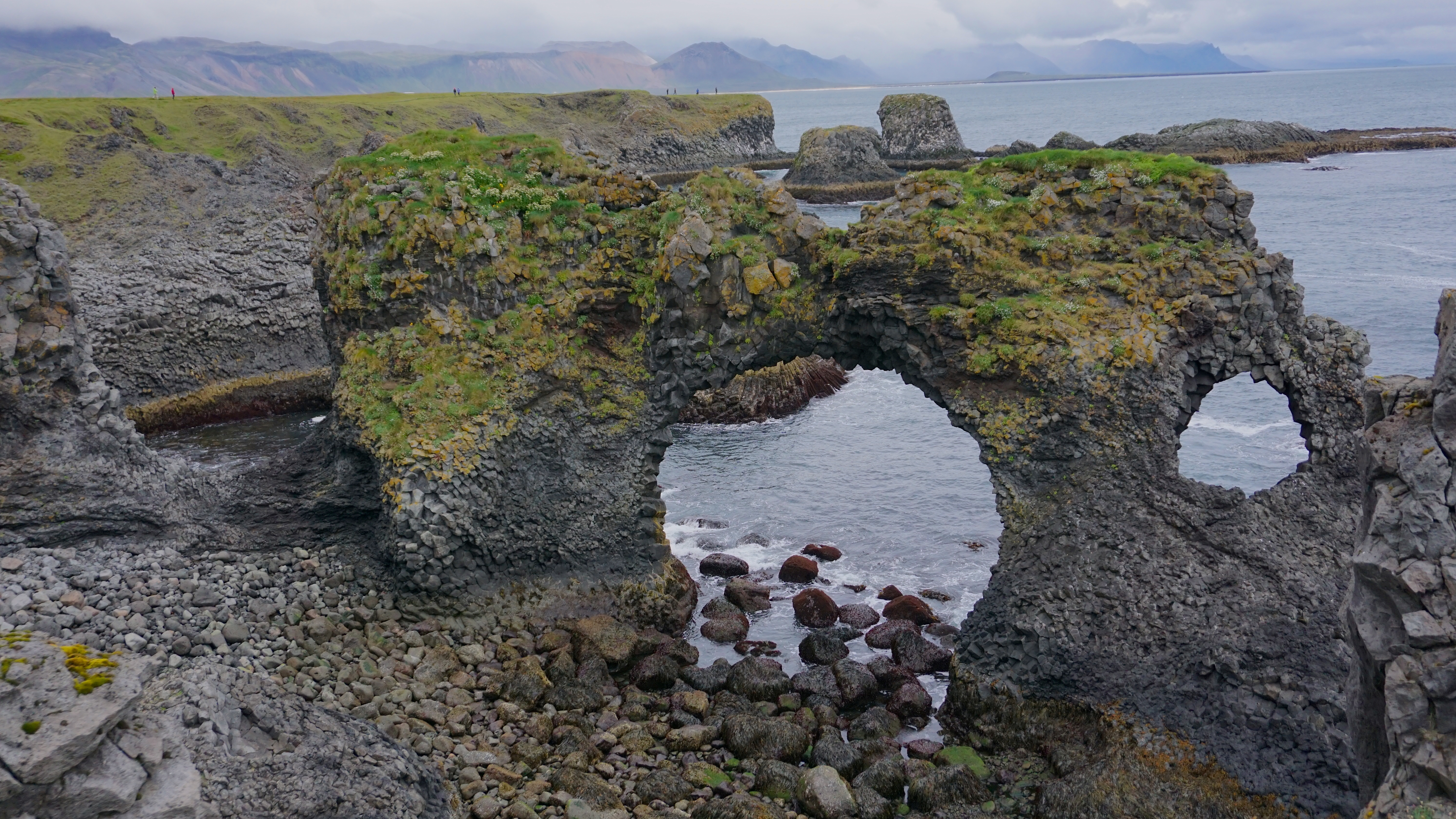
Passing the sculpture was a path towards the cliffs of Arnarstapi. More basaltic columns could be seen on either side, creating the very cliff that the lookout leading over the edge was on. Walking left along the path led to another popular photo spot, an enormous arch made of rock rising out of the water. The tides were low so that more of the rocky bottom beneath the cliffs could be seen.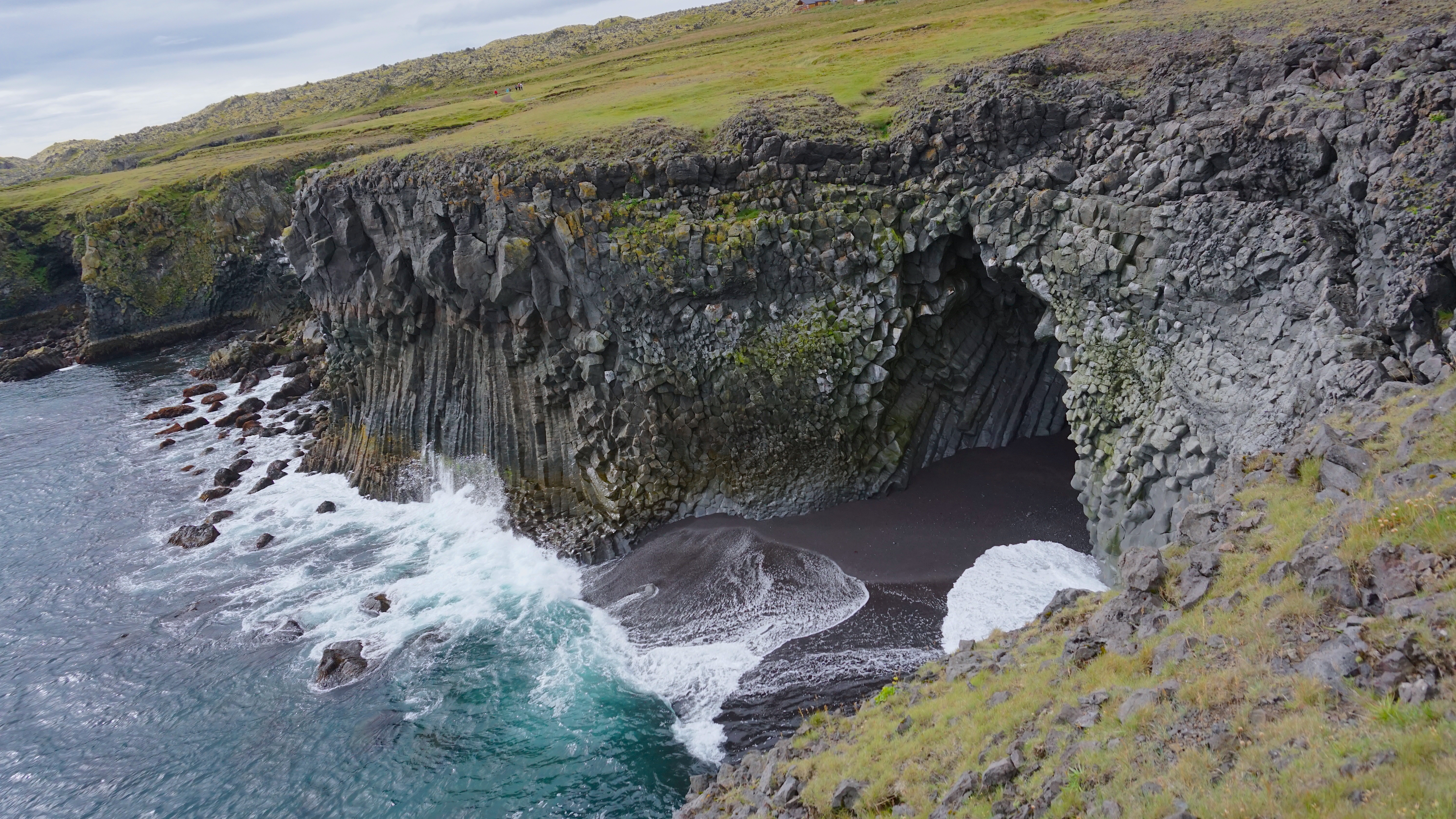
There’s actually a path from Arnarstapi leading to Hellnar that’s 2.5km, but we chose to drive so we could continue our journey after Hellnar. I found Hellnar to be an even smaller village, yet still quaint. Here you can actually walk down a couple trails towards the water where the tide comes in. We saw several nests where seagulls would lie, tucked away into sharp alcoves. After building our own small cairn amongst many others (no harm done to any ancient moss, of course) and snapping some photos, we carried on. Our next stop was somewhere I planned in advance and took great interest in. After all, I wanted to journey to the center of the earth myself, at least into a lava tube.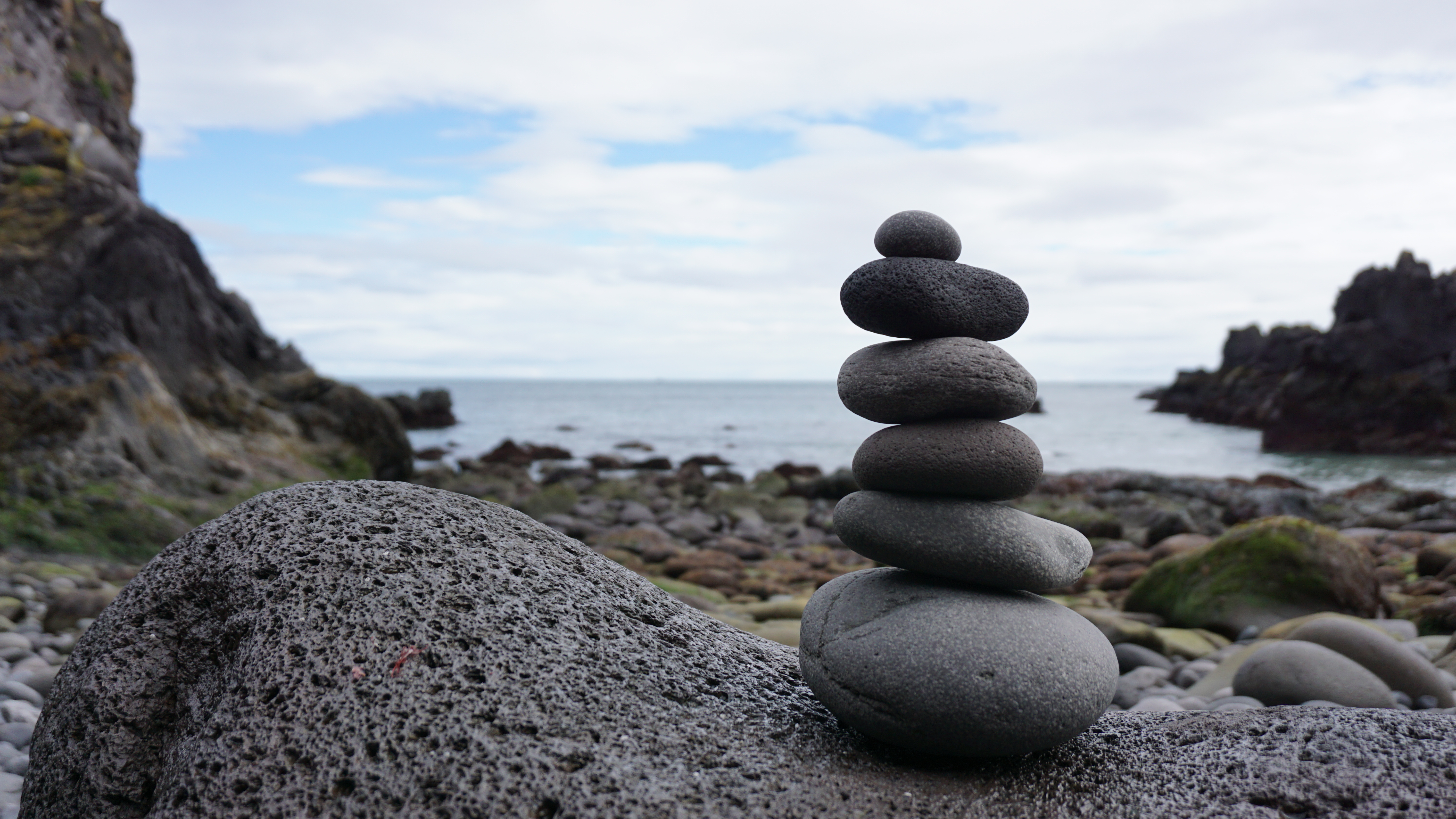
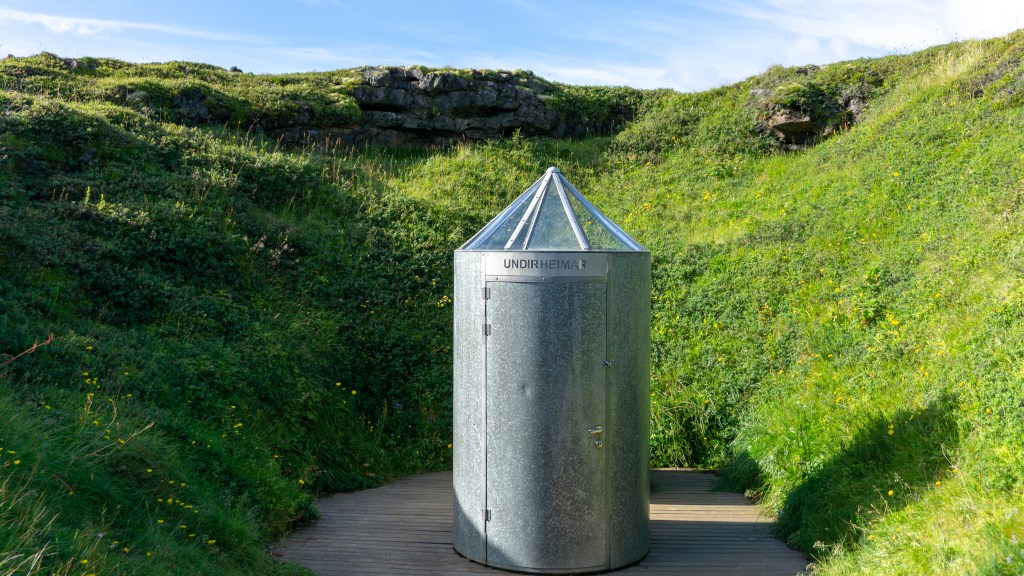
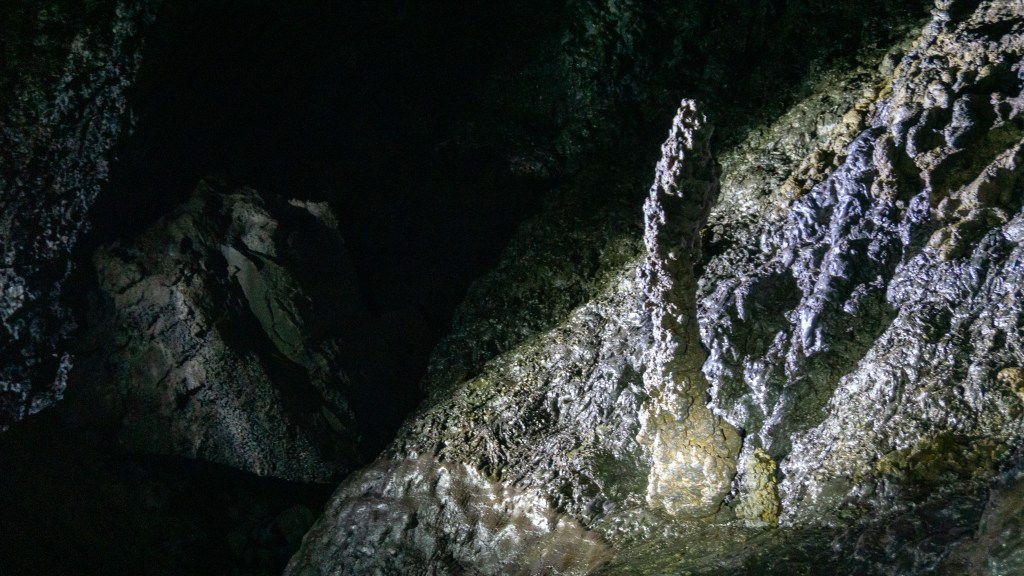
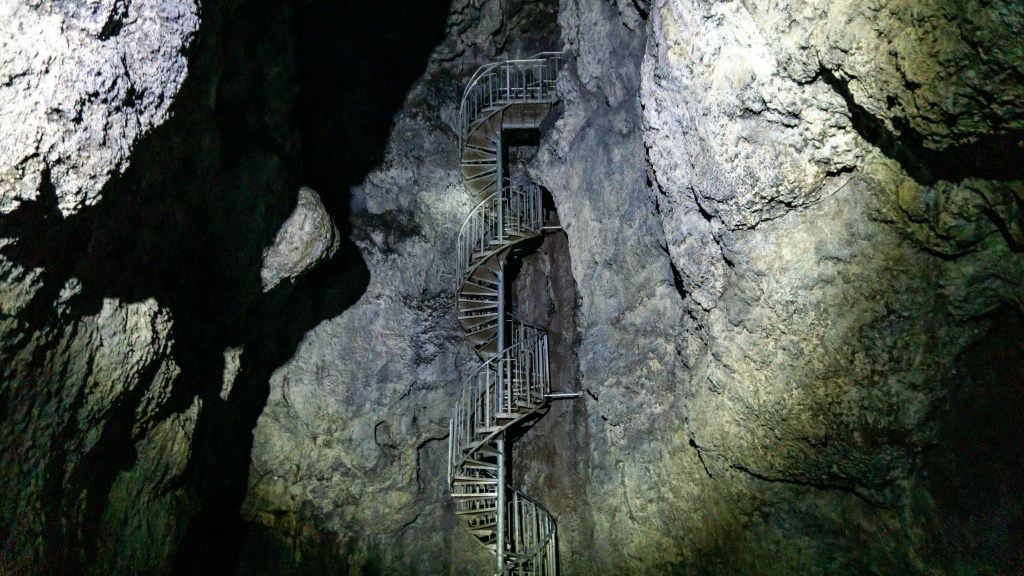
Vatnshellir Cave required us to wear helmets and be equipped with LED flashlights so that we could find our way underground. It is important to note that it is very cold in the lava tube, as no sunshine ever reaches it. Even in the summertime, temperatures can be as low as 40ºF so it is wise to dress warmly. Our group of twenty or so gathered around the guide who led us down a spiral staircase into the lava tube. In the lava tube, we learned that the lava surrounding us does not echo like normal caves. Also that there are not typical stalagmites and stalactites, the only “stalagmites” in the tube are shorter except for one named The Finger where the heat from the magma rose in place in those particular spots.
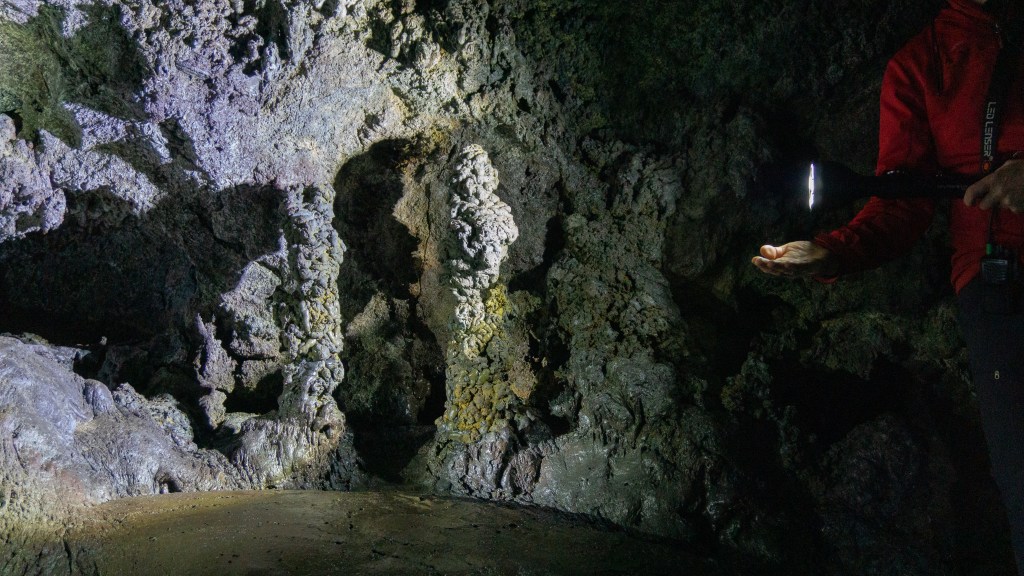
As we walked through the lava tube, checking our footing as we went, we stopped in a large open area. The guide asked the group what we saw on the walls and ceiling. The area sparkled a dim silvery color as we shone our lights along the walls. A few people suggested it was the mineral mica but were incorrect. Our guide explained to us that it was bacteria, the only living creatures that lived in the tube. He followed up by saying that the bacteria is harmless to humans, and that too much light exposure can hurt it over time which is why it thrives in the darkness.
Once we approached the end of the lava tube we were met with a second spiral staircase that lead downward even further. Once we descended, our guide told us all to turn off our lights and be quiet for a minute. The feeling of being immersed in total darkness was surreal, and the only thing we could hear was water dripping from the ceiling that had been there for years and years.
After we emerged from Vatnshellir Cave, we drove a few minutes down the road to a parking area that has a beautiful view of Lóndrangar. Lóndrangar comprises of basalt cliffs along the edge of the mainland with a large mass of ancient lava bursting to the surface. My girlfriend and I sat on the cliffs there for a half hour or so just taking in the scenery and enjoying the rarity of bright sunshine. Other tourists hiked along the cliffs and even a couple people could be seen sunbathing, funny enough. Across from the ocean and on the other side of the road, Snæfellsjökull was visible in its great might, beckoning travelers to ascend it via F-roads or snowmobiles in the winter season.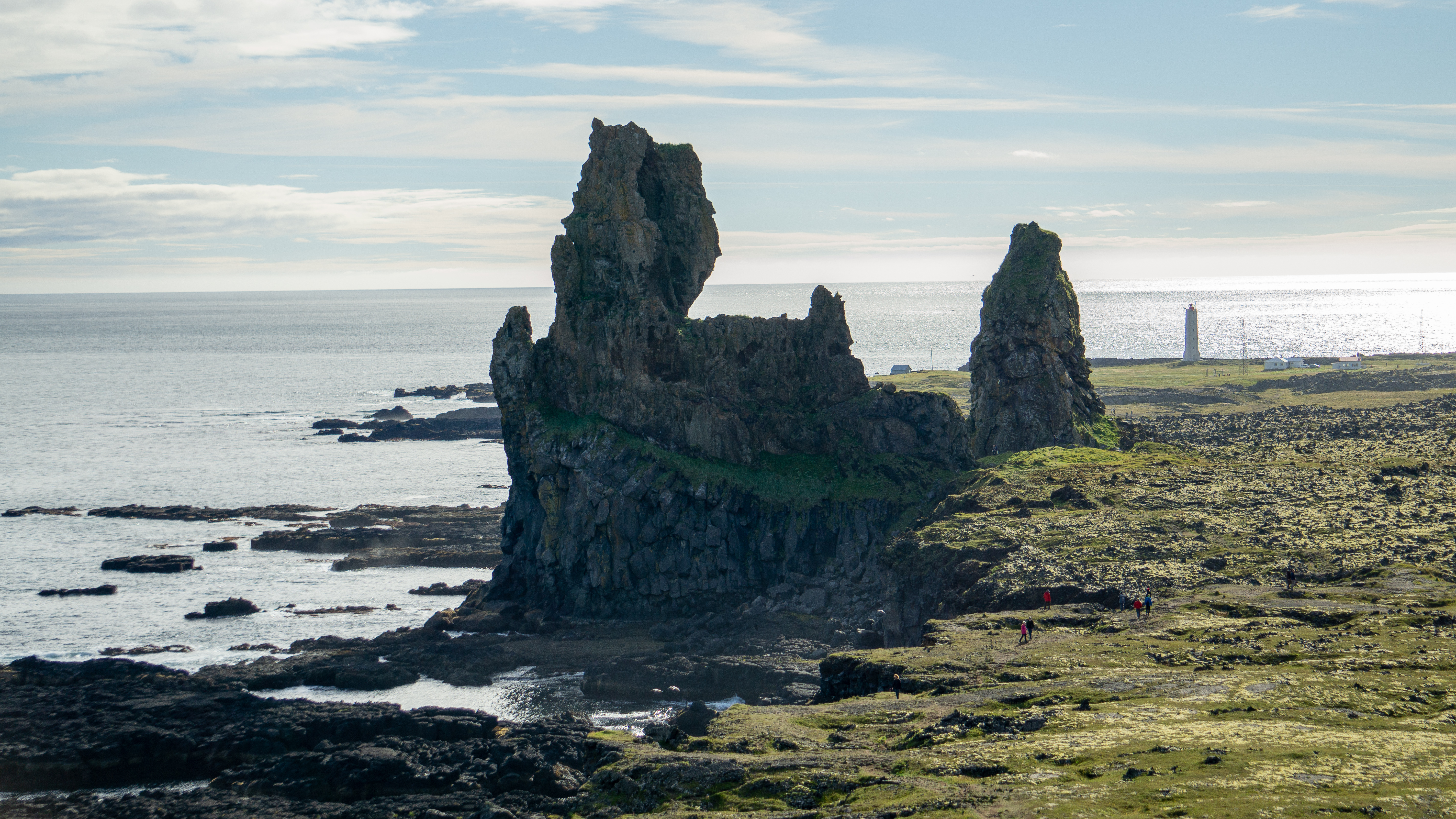
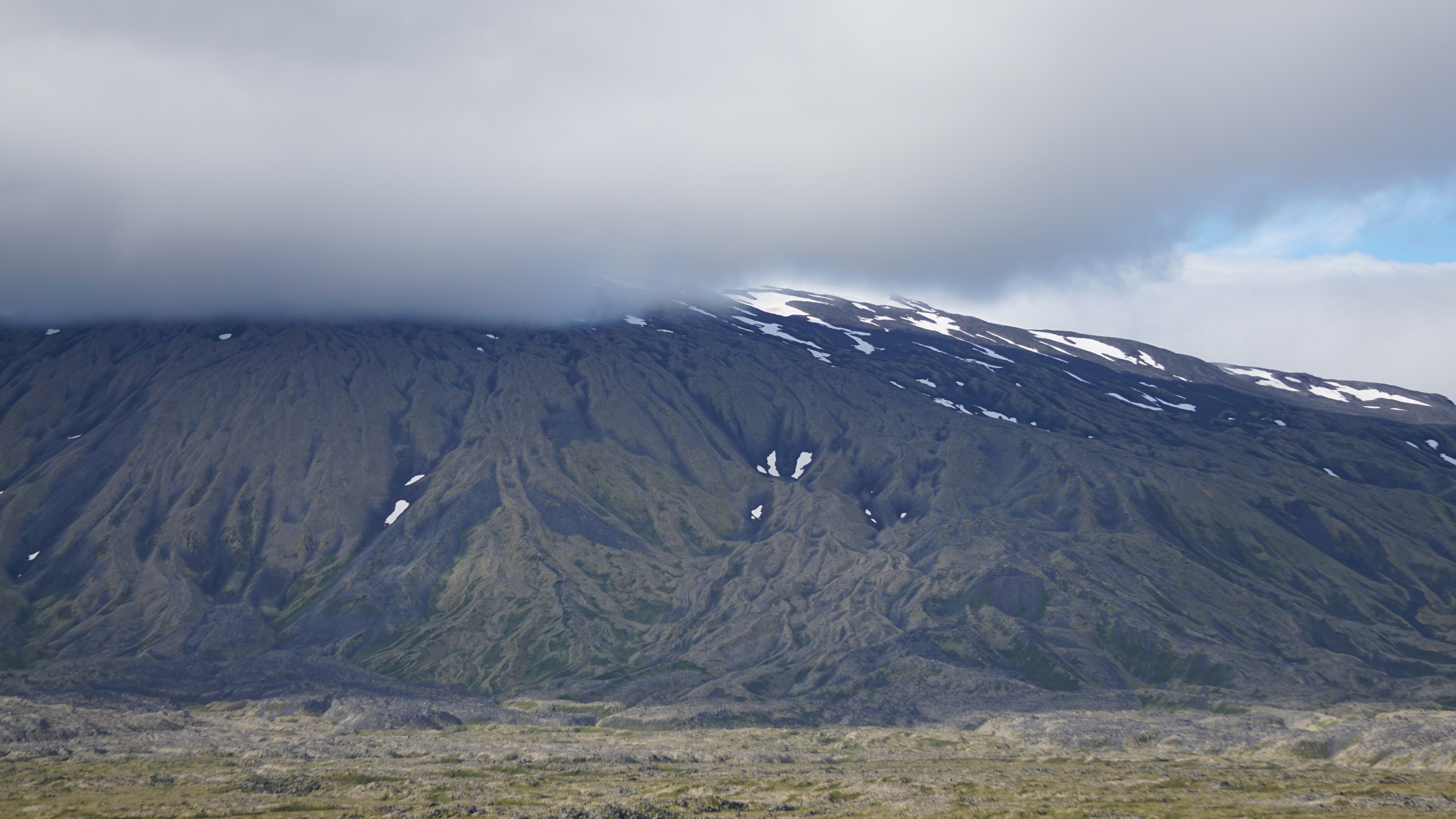
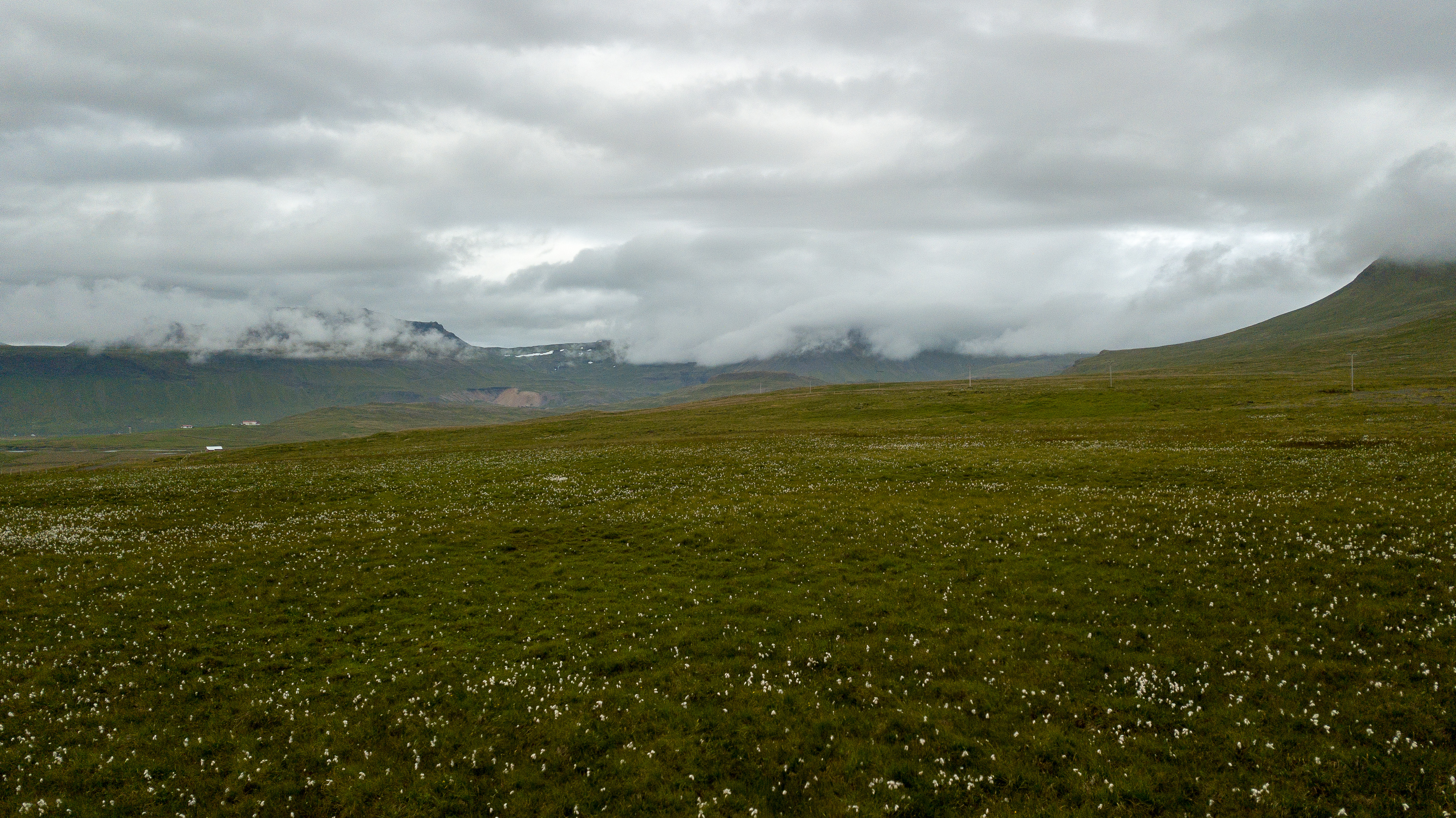
The remainder of the day consisted of driving along the edge of Snæfellsnes Peninsula crossing between mountains and over bridges. Our goal was to properly camp this night and we settled on a site in the fishing village of Stykkishólmur. Along the way we stopped along a property that had a few horses that were more than delighted to have their picture taken. Icelandic horses are pretty cute with their colors and stocky builds.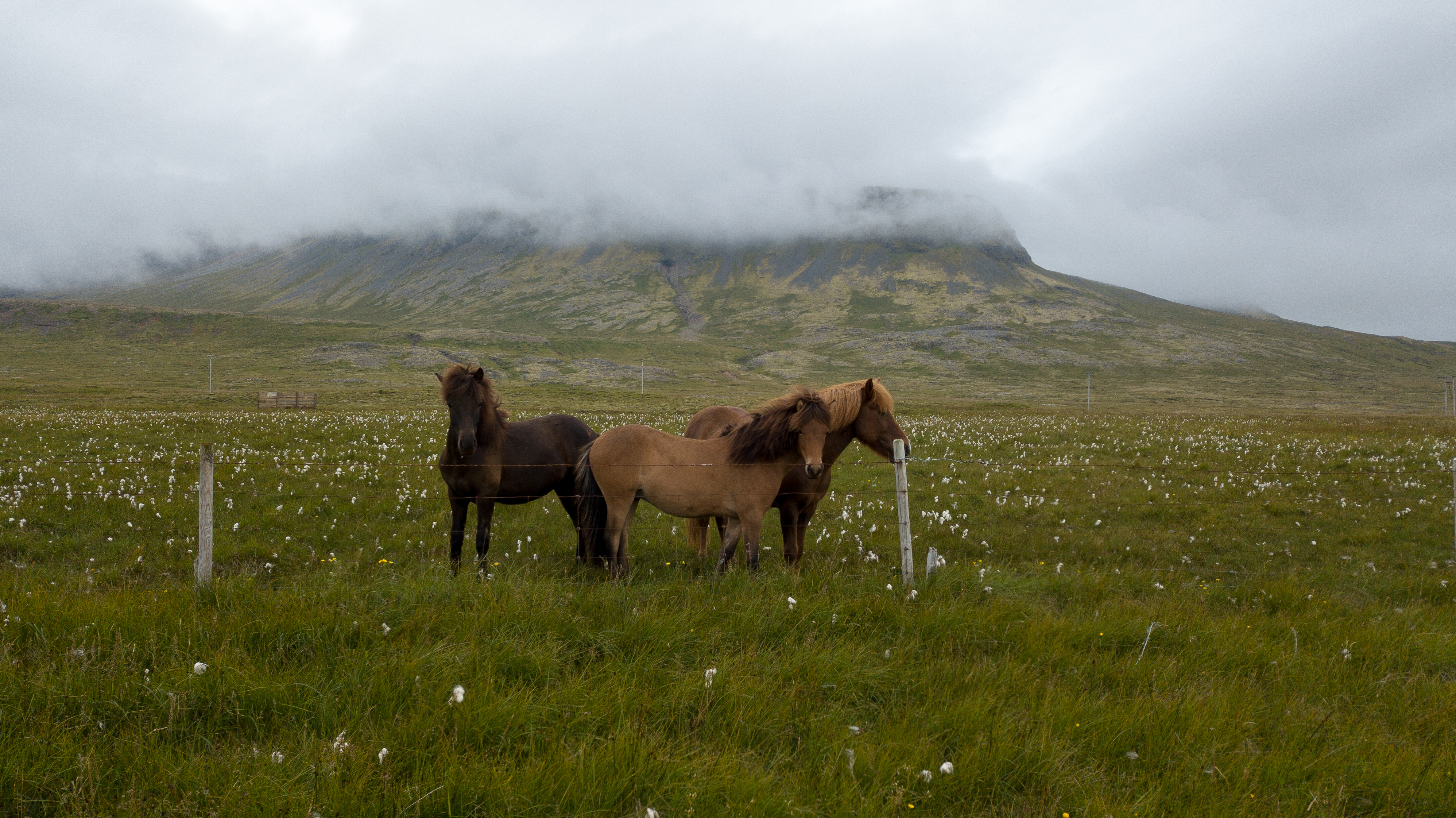
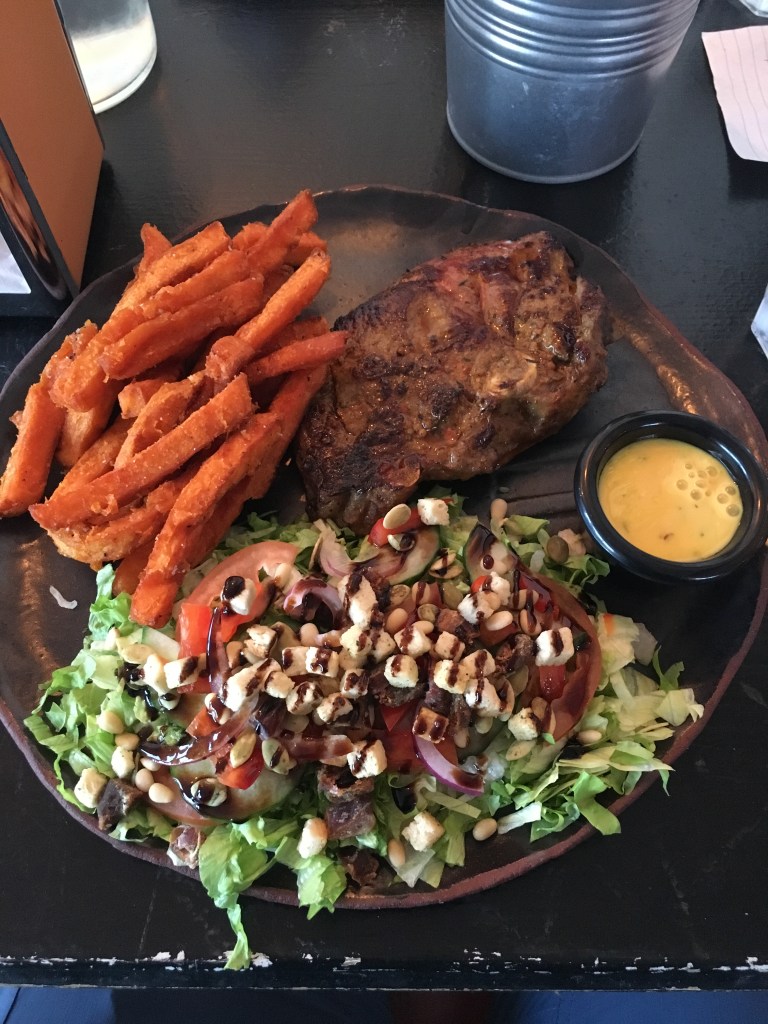
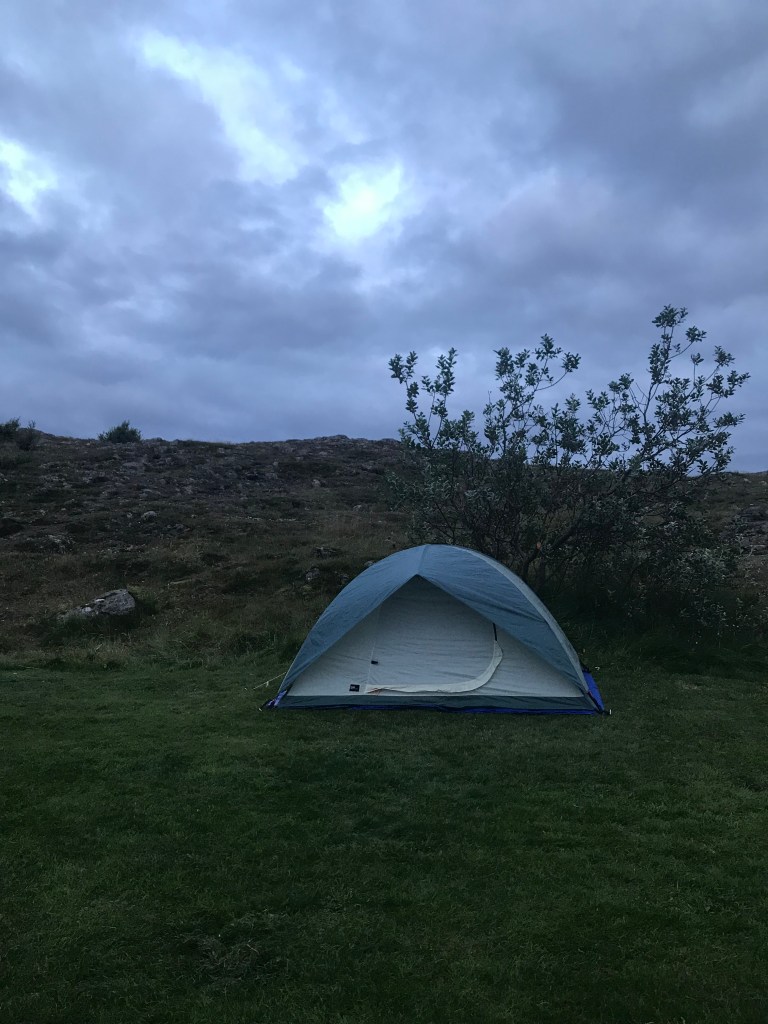
By late afternoon we had finally reached the lovely town of Stykkishólmur and we were famished. We stopped at the campsite and pitched our tent then proceeded to ride around town looking for a good place to stop and eat. We ended up eating at a restaurant called Skurinn and it was delicious. I had lamb, sweet potato fries, and an actual salad (a rarity in Iceland), I was so happy. After dinner we continued to drive and found the church in the area with its own unique architecture and design. We saw the boats docked that bring in the fish each day at sundown. The village sure had its charm. At the end of the night my girlfriend and I were exhausted but fell asleep with relative ease despite camping out in the elements again, this time properly camping and not being afraid of any park rangers getting onto us.


Leave a comment